
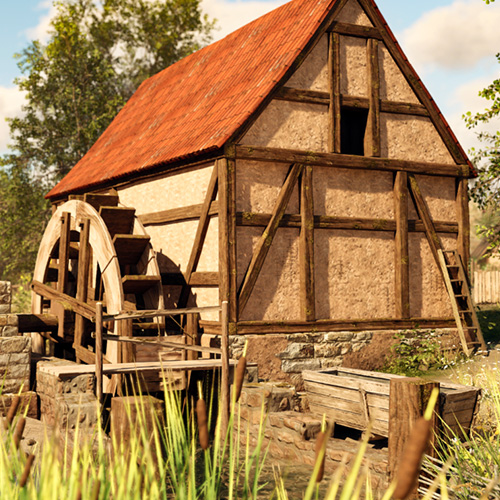
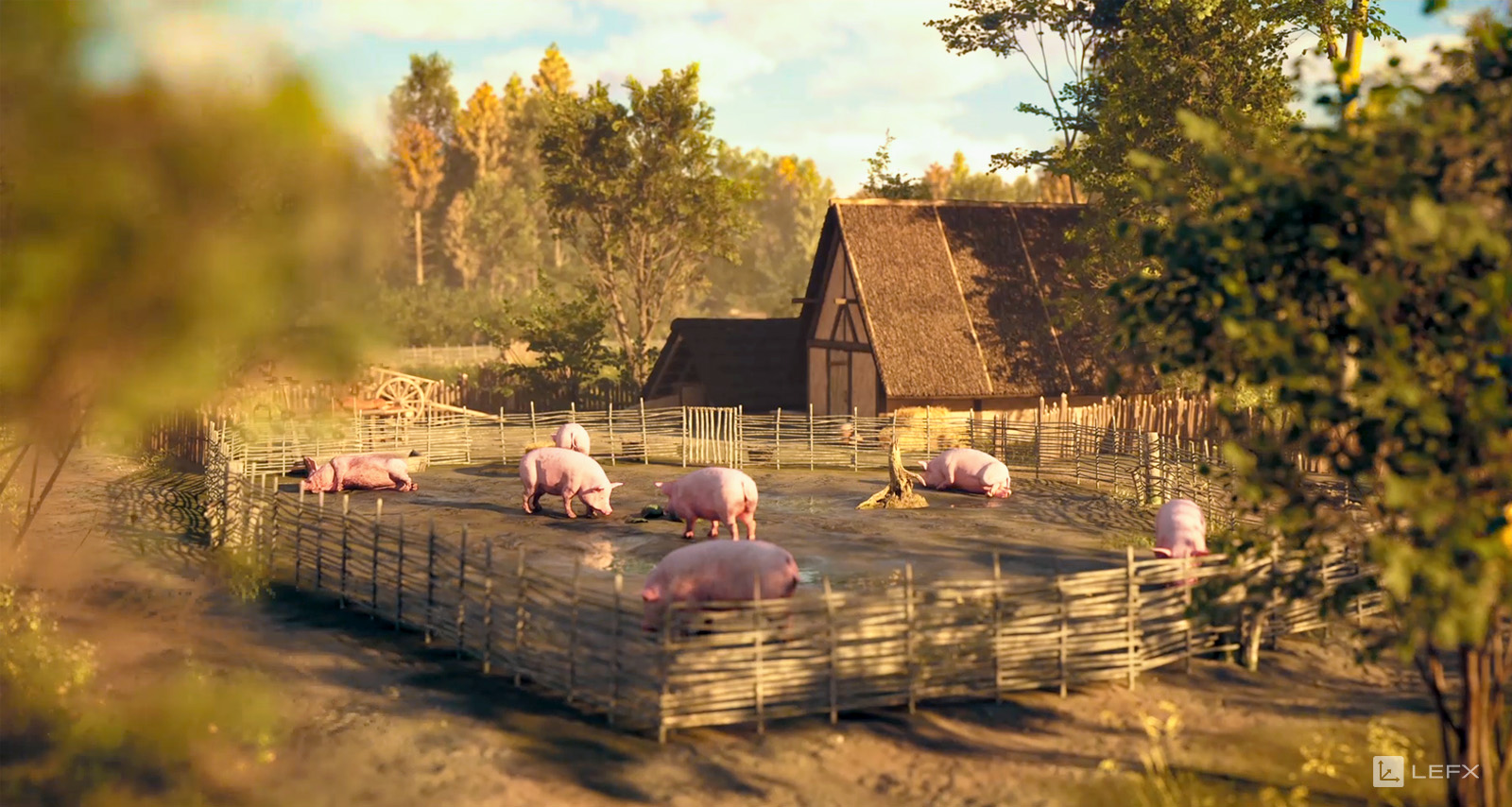
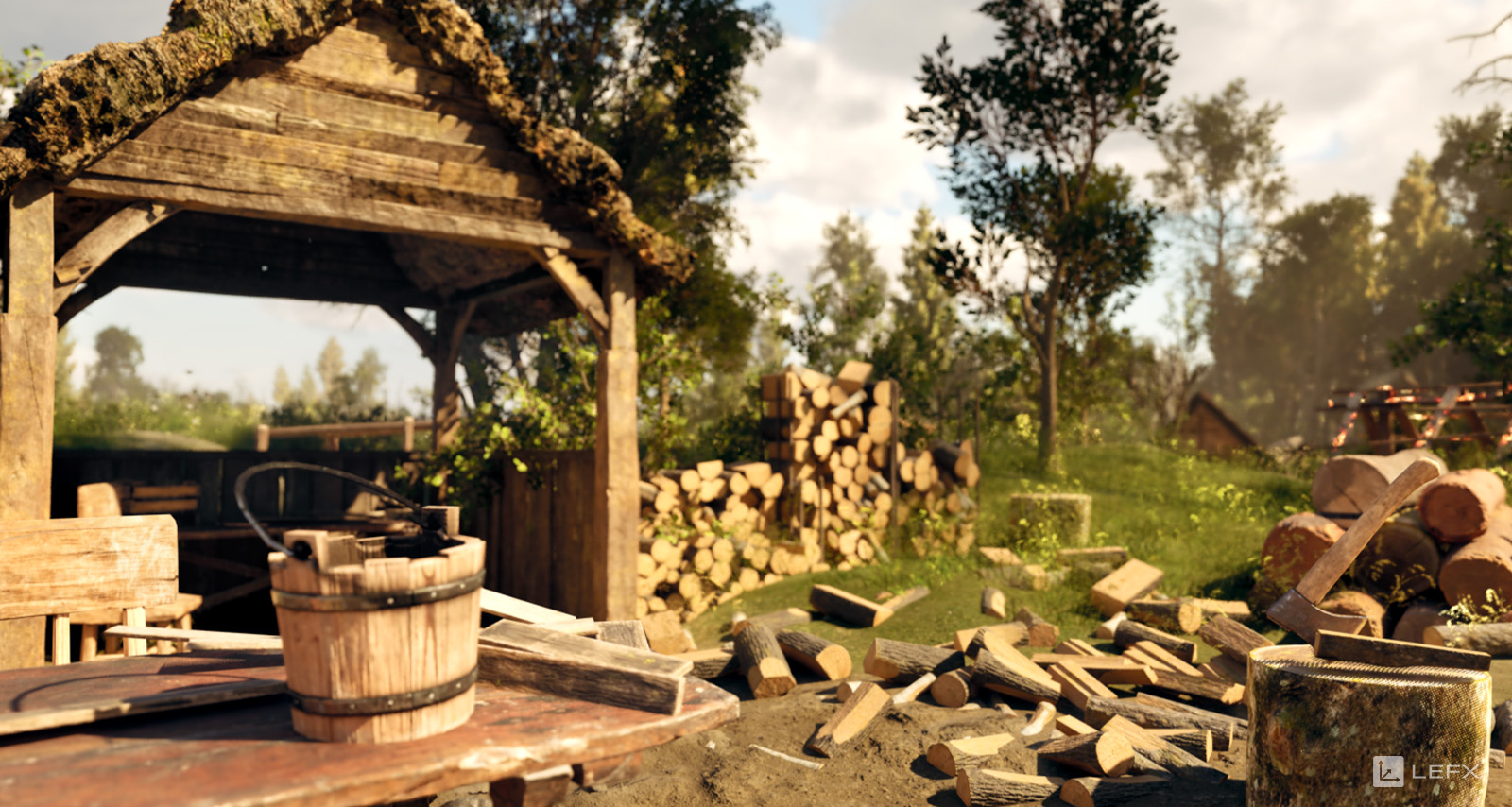
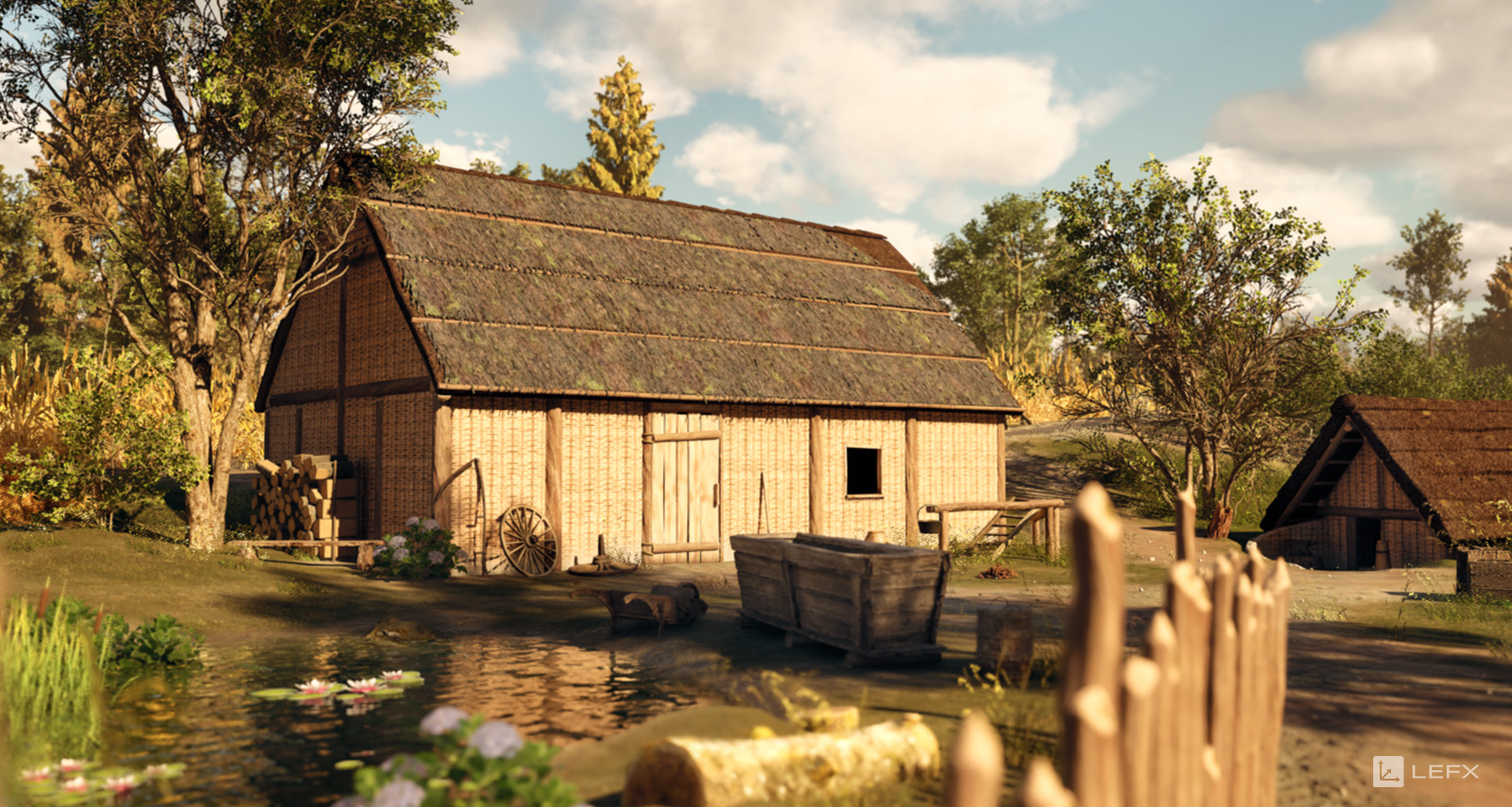
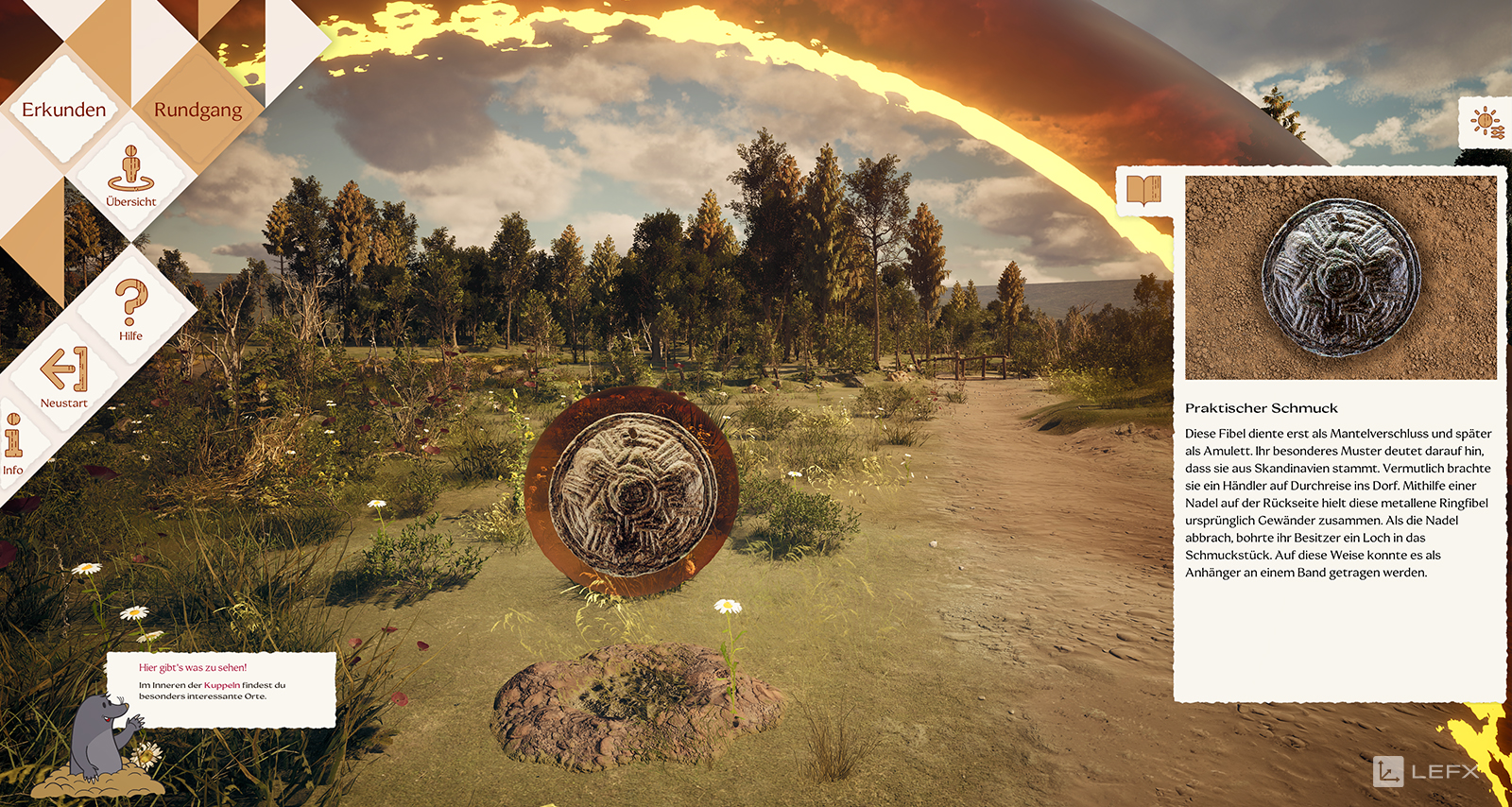
Medieval Diorama
Why create a virtual world when the State Garden Show is all about exploring real gardens? It’s simple: with our project, we bring to life a part of the site that would otherwise remain hidden without digital support. The remains of a medieval settlement were discovered on the grounds, and we’re making them digitally accessible.
We’ll now show you how we’re creating a detailed and interactive 3D world from just a handful of archaeological data points.
First things first – the key facts about the project
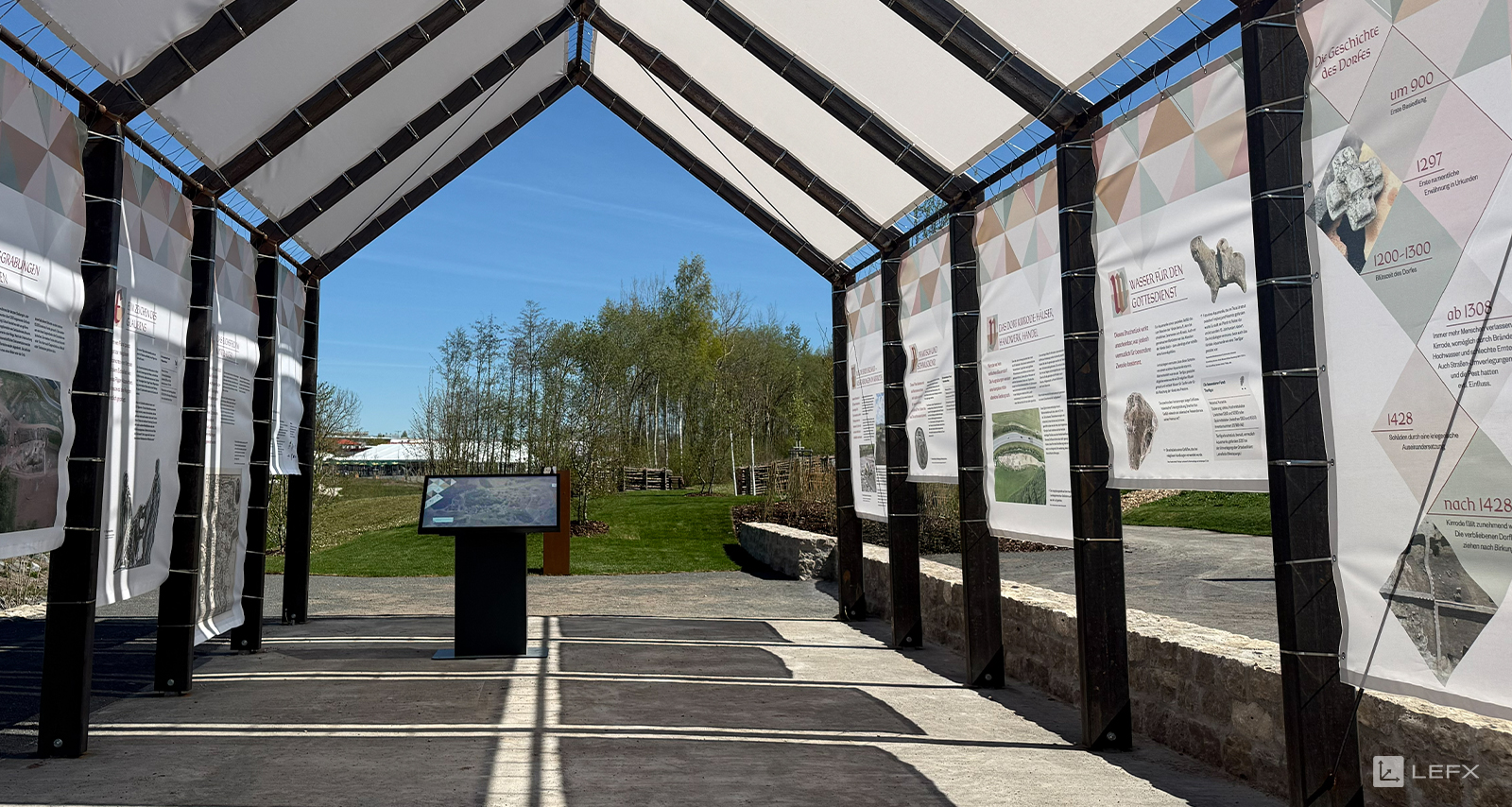
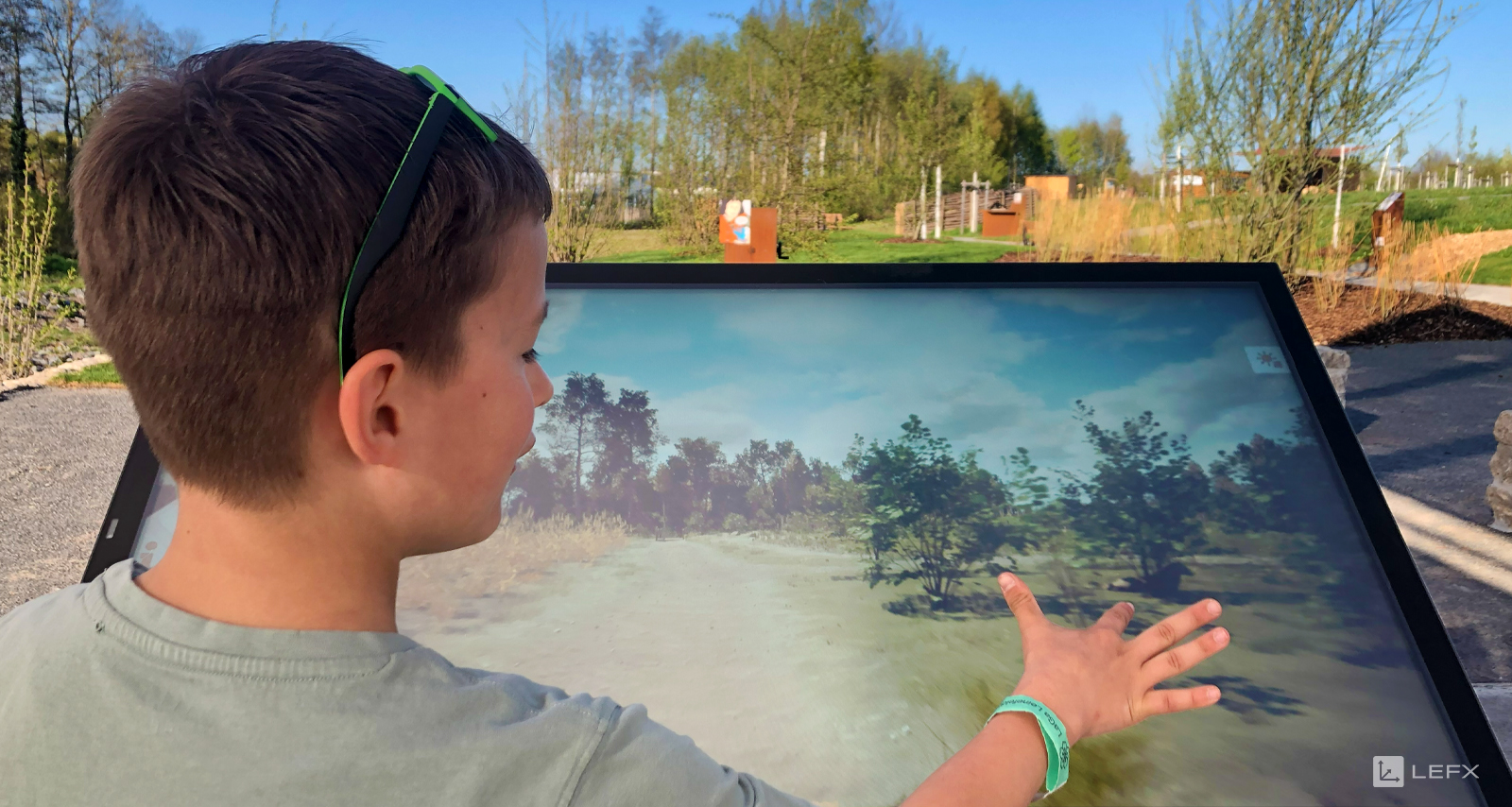
Our client is the Thuringian State Garden Show Leinefelde-Worbis 2026. The project originated from a call for proposals and is intended as a digital complement to an accompanying exhibition. This will take the form of a stationary application as well as a mobile app.
Special Needs – The Minimalist Data Set
The sparse data set is definitely our biggest challenge in this project, as there is hardly any usable material aside from a few excavation findings. The settlement in question was abandoned as early as the Middle Ages, which is why there are only a few historical records.
Although the site was archaeologically surveyed once again in the run-up to the State Garden Show, unfortunately even these findings do not provide an ideal basis for creating an authentic and historically accurate reconstruction of the “Kirrode” site down to the last detail.
Workflow
At first glance, all of this sounds like an enormous workload—but with a few clever tech tricks up our sleeve and well-established pipelines, it’s no problem. The magic words are “procedural generation” instead of “custom-made”—in other words, the automated creation of large, detailed 3D worlds. But don’t worry—despite this, our client certainly won’t be getting a run-of-the-mill, off-the-shelf solution.
Our framework functions like a modular system that allows for the rapid, automated generation of realistic landscapes with a high level of detail and high-performance rendering. To achieve this, we rely on tools such as Gaea, PCG, and Gaussian Splatting. This foundation is complemented by a custom-designed asset pack that can be flexibly integrated into any scene.
On top of that, of course, is our attention to detail, which lends each scene its unique character through targeted manual refinement.
And now for the action
Of course, it’s not enough for our medieval world to simply look stunning—we also need to bring it to life for visitors to the State Garden Show. That’s why there will be several ways to explore our interactive 3D experience.
First, there’s a first-person tour. Similar to Google Street View, you can stroll leisurely through the village and discover information along the way.
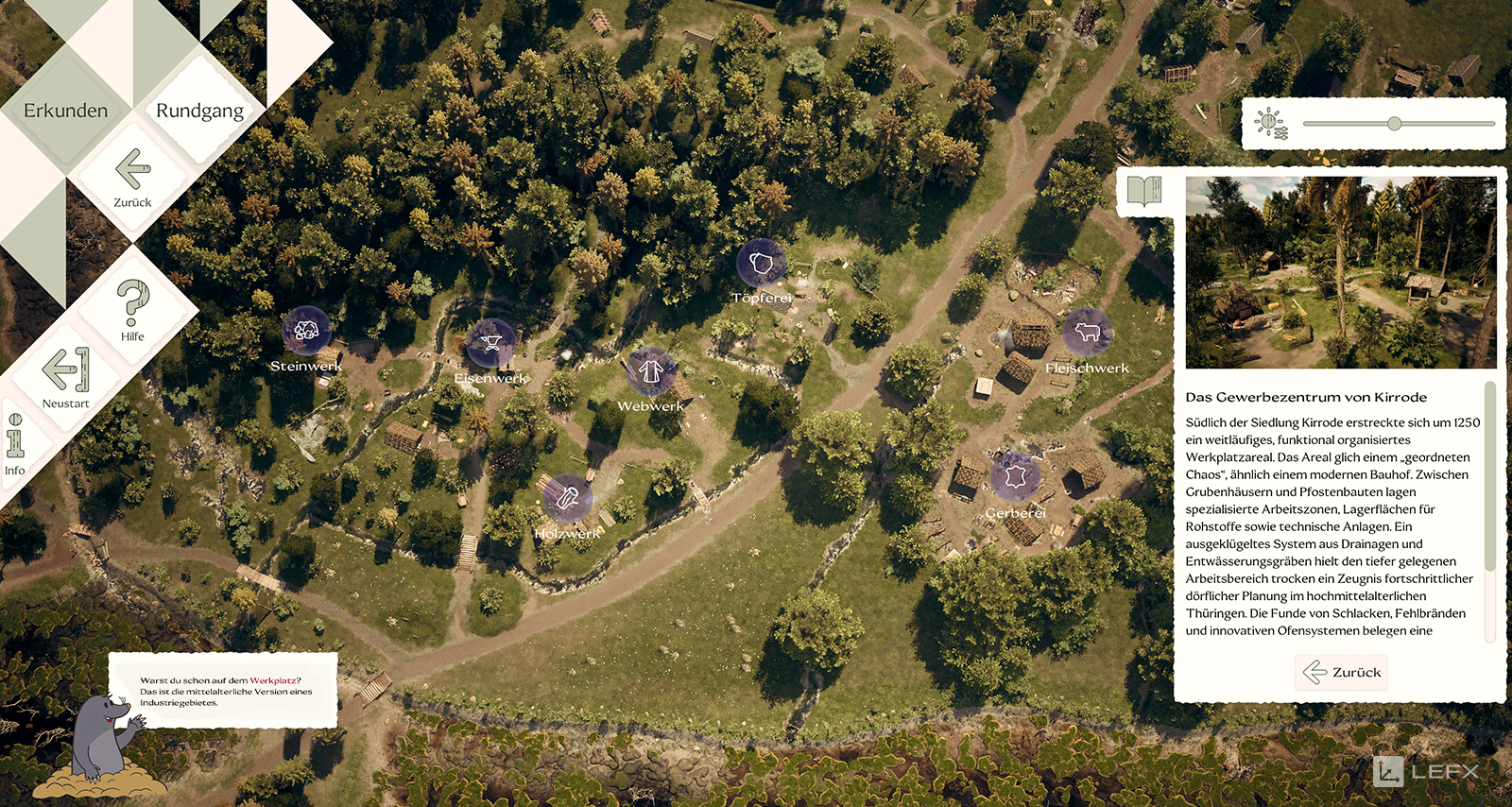
Second, there’s a mode where visitors can search for interesting locations from a bird’s-eye view. Thanks to selected viewpoints, they won’t miss any stunning shots or details in this mode either.
To ensure the application remains usable in the long term and to provide additional content for a younger audience, we’re taking gamification up a notch. We’re planning a third mode that uses playful quests to guide users to selected locations and, embedded within a short story, conveys knowledge about life in the Middle Ages.
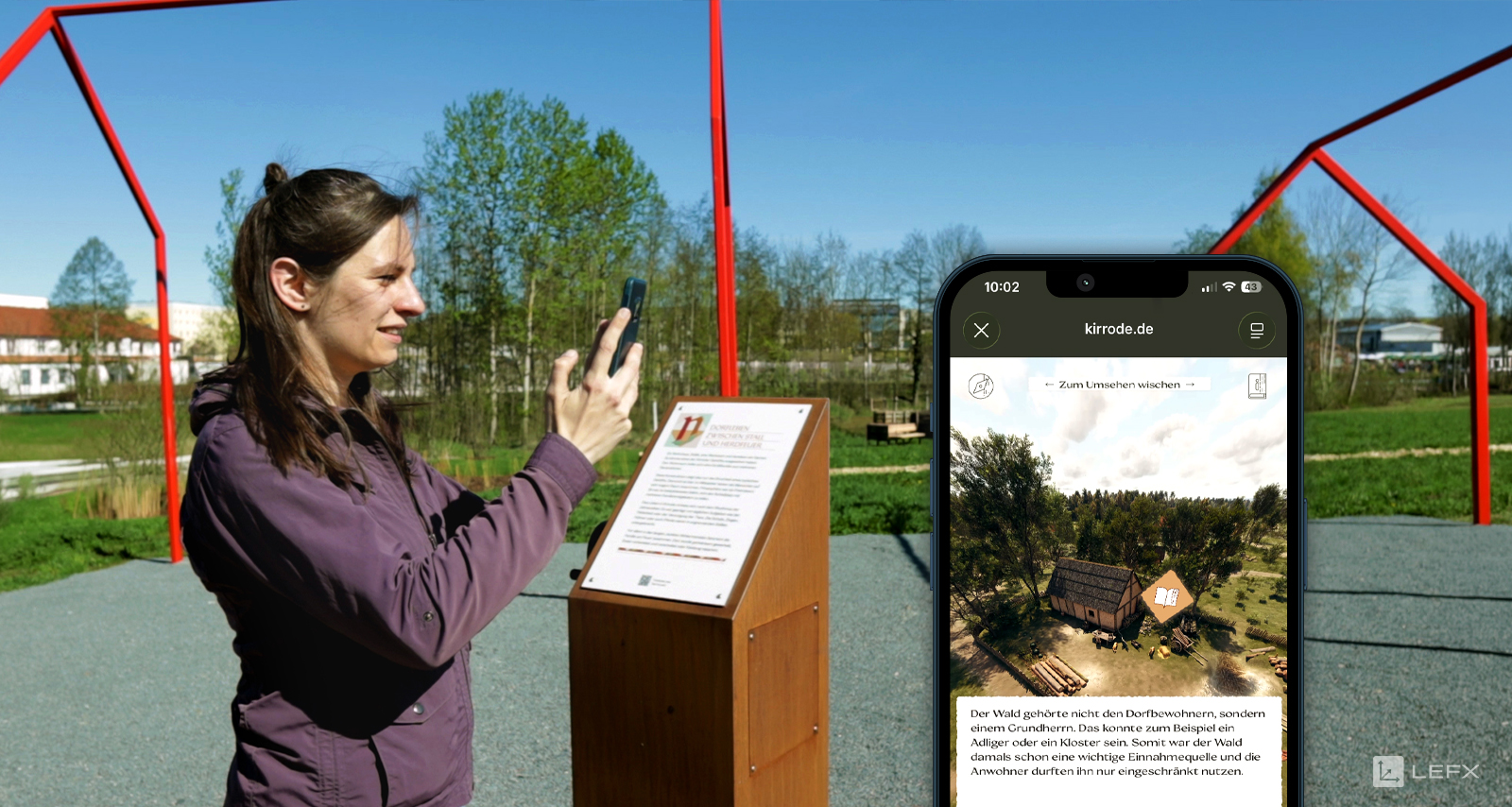
There is also a mobile app. With this, visitors can experience a virtual walk through the medieval settlement in the form of a streamlined, browser-based 360° version of our 3D world.
360° Tour
Medieval Miniature – The Middle Ages in Small Scale
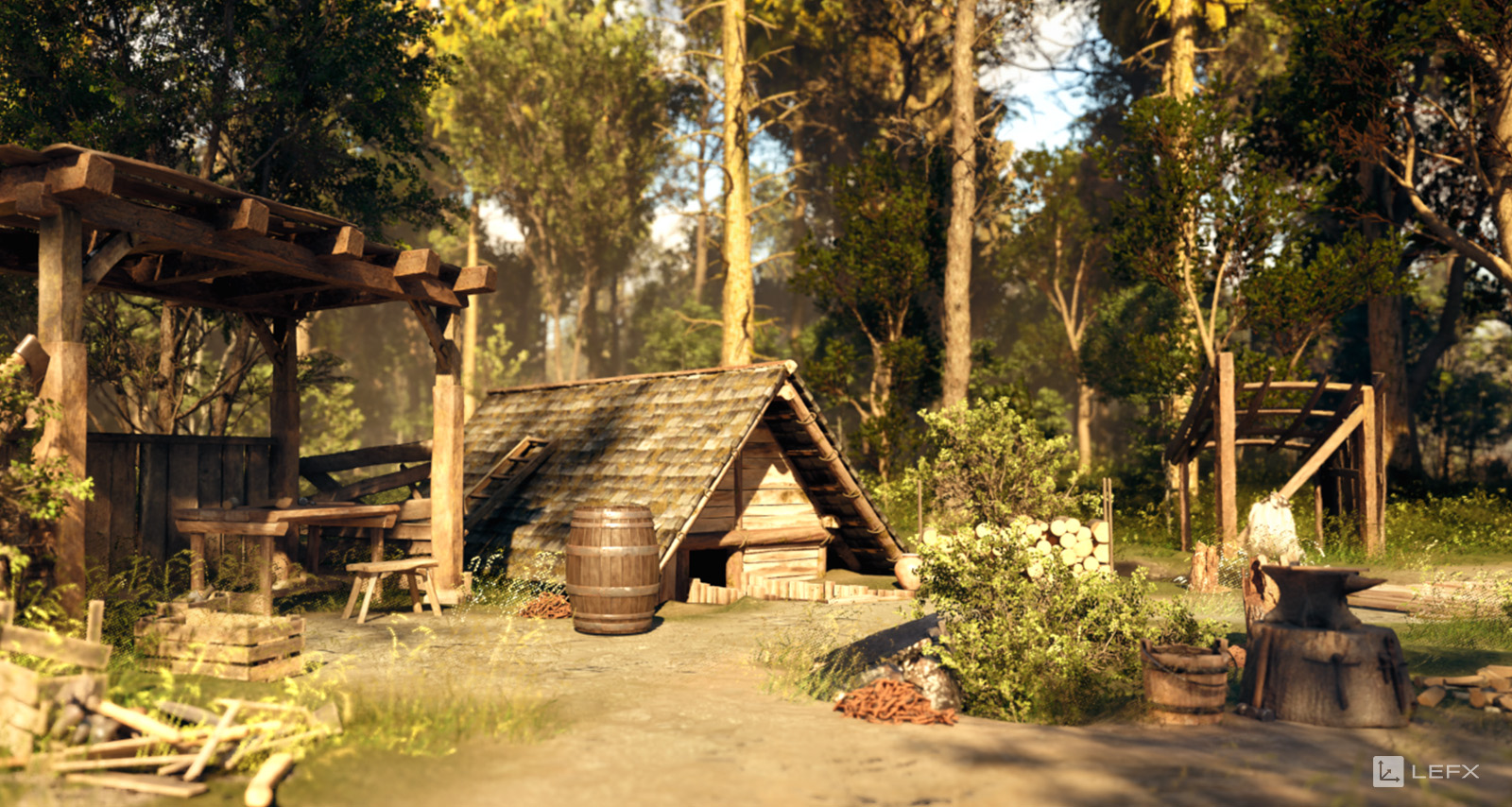
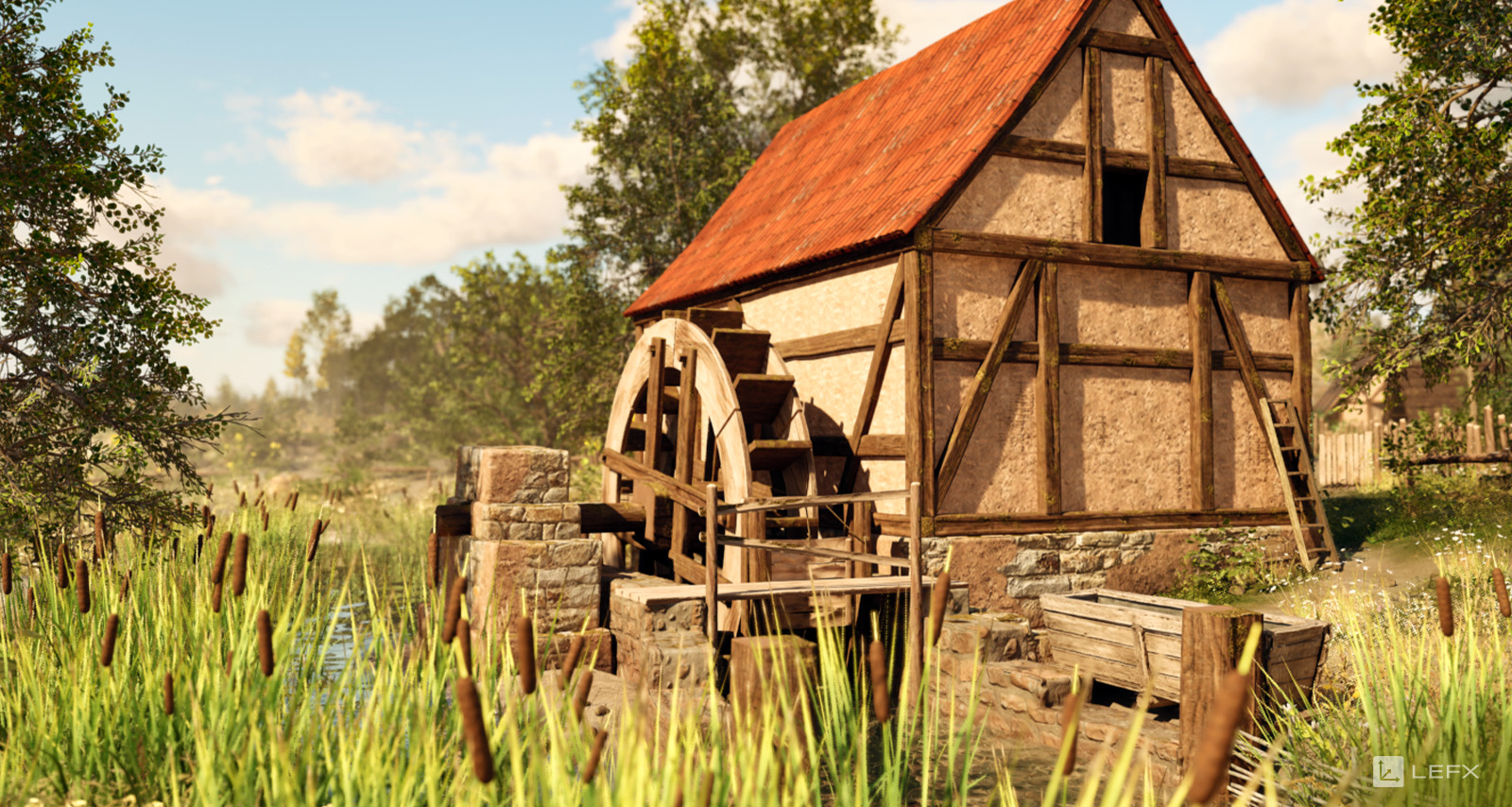
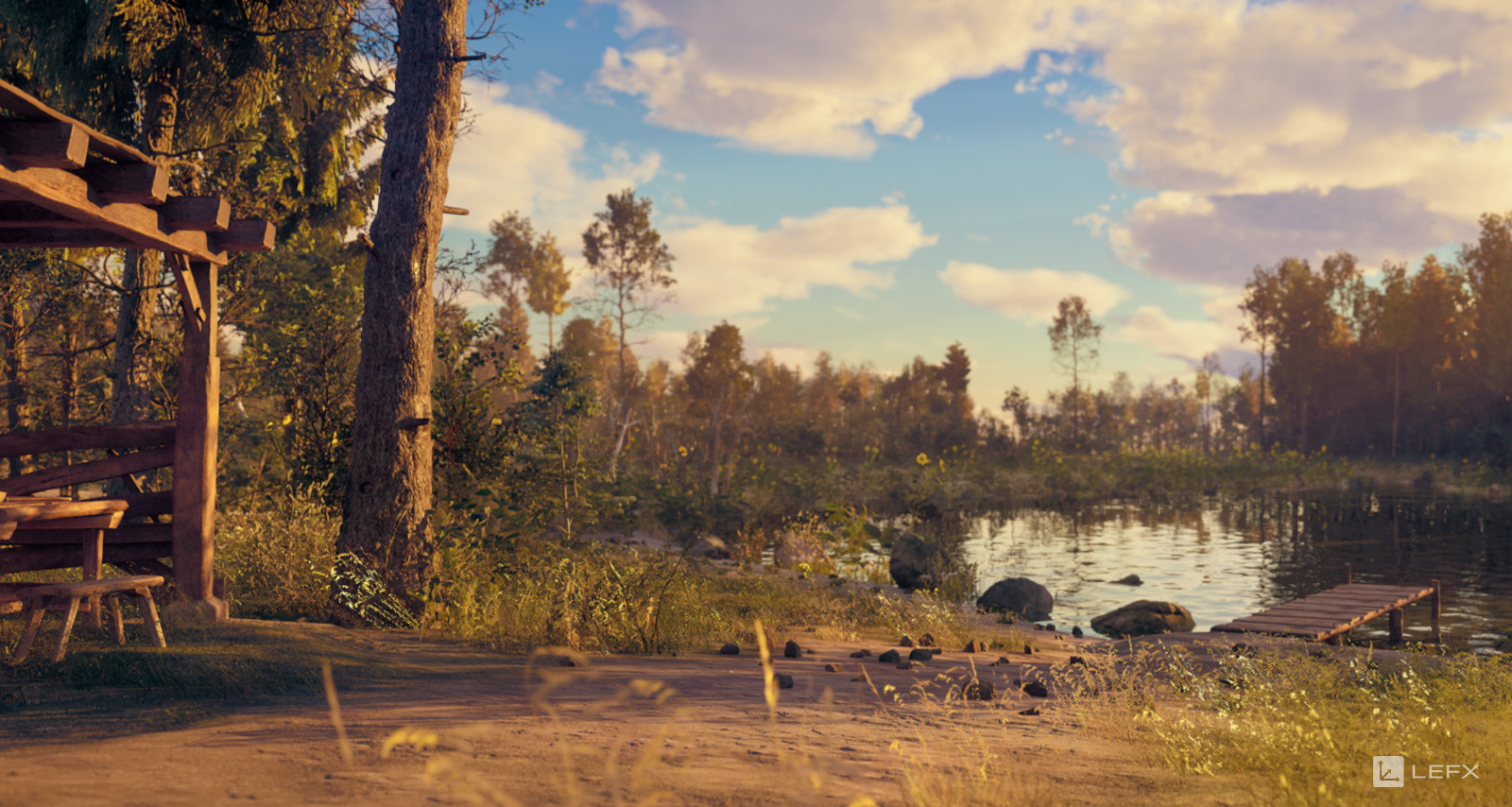
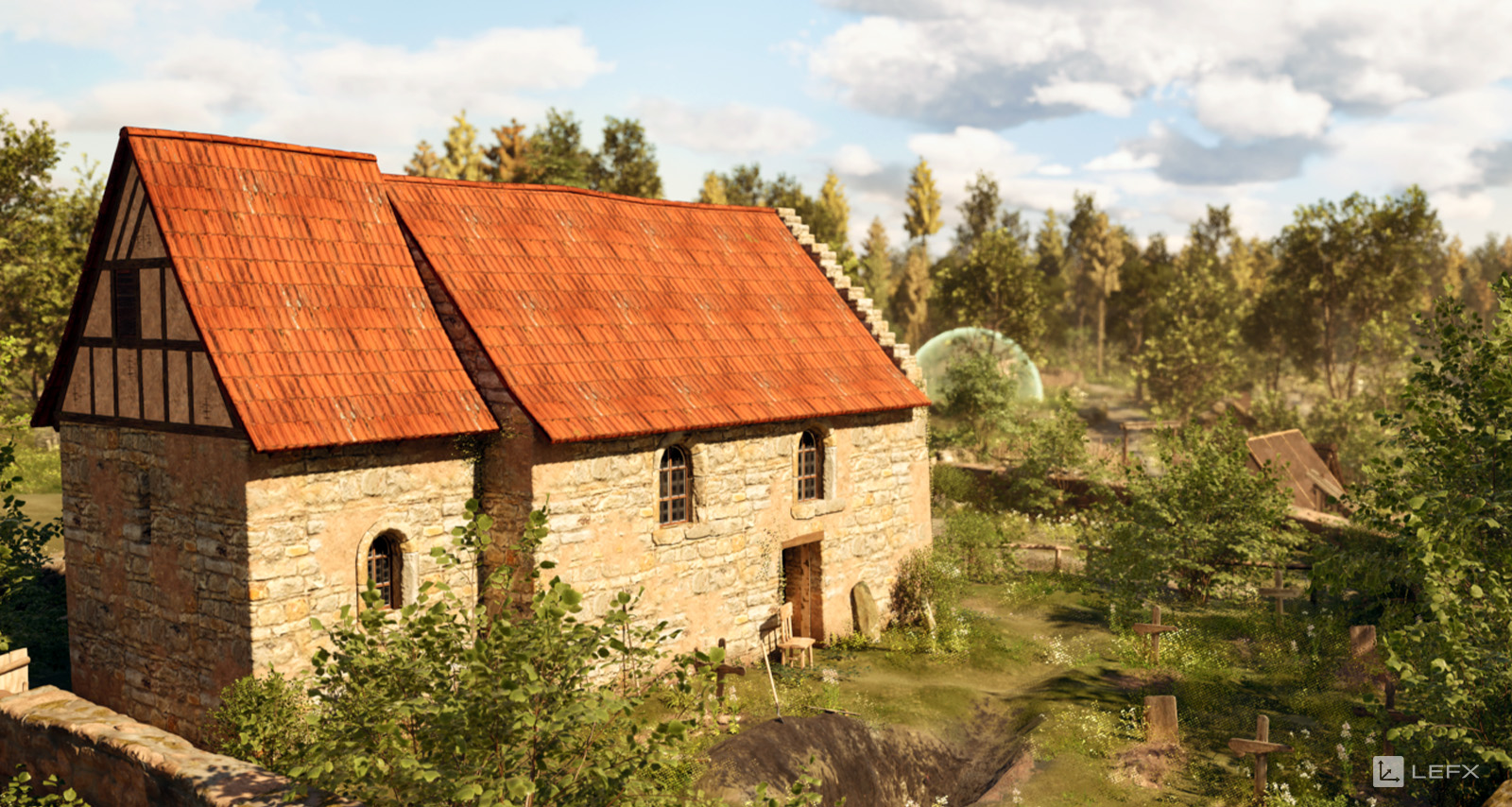
A visually appealing environment naturally invites visitors to linger and explore. We enhance this sense of immersion through a charming miniature aesthetic, created by the generous use of depth of field. Much like a model train layout, we create an interesting diorama that constantly draws the eye to new details, encouraging visitors to stay longer.
Try it Yourself
Why not pop along and let us whisk you away to the Middle Ages! The State Garden Show in Leinefelde-Worbis is open until 11 October 2026. But our portal will remain open for you even after that. That’s because our 3D world, complete with touchscreen, will be moving to a new location within the town after the exhibition ends. As the area with the QR codes is set to become a public park, this part of the digital journey through time will also remain accessible in future. This creates a sustainable offering with added value for tourism that will endure long after the actual event has ended.
Partners
To ensure our module integrated seamlessly into the rest of the exhibition design, we worked closely with the agency INSEL + MEILE. This ensures a consistent design, and visitors experience no disruption to their journey despite the change in media.